Genuine vs. Dyed or Heat-Treated Crystals: A Spotter's Guide
Learn to spot dye pooling, unnatural saturation, and coated surfaces with simple at-home checks, and read...

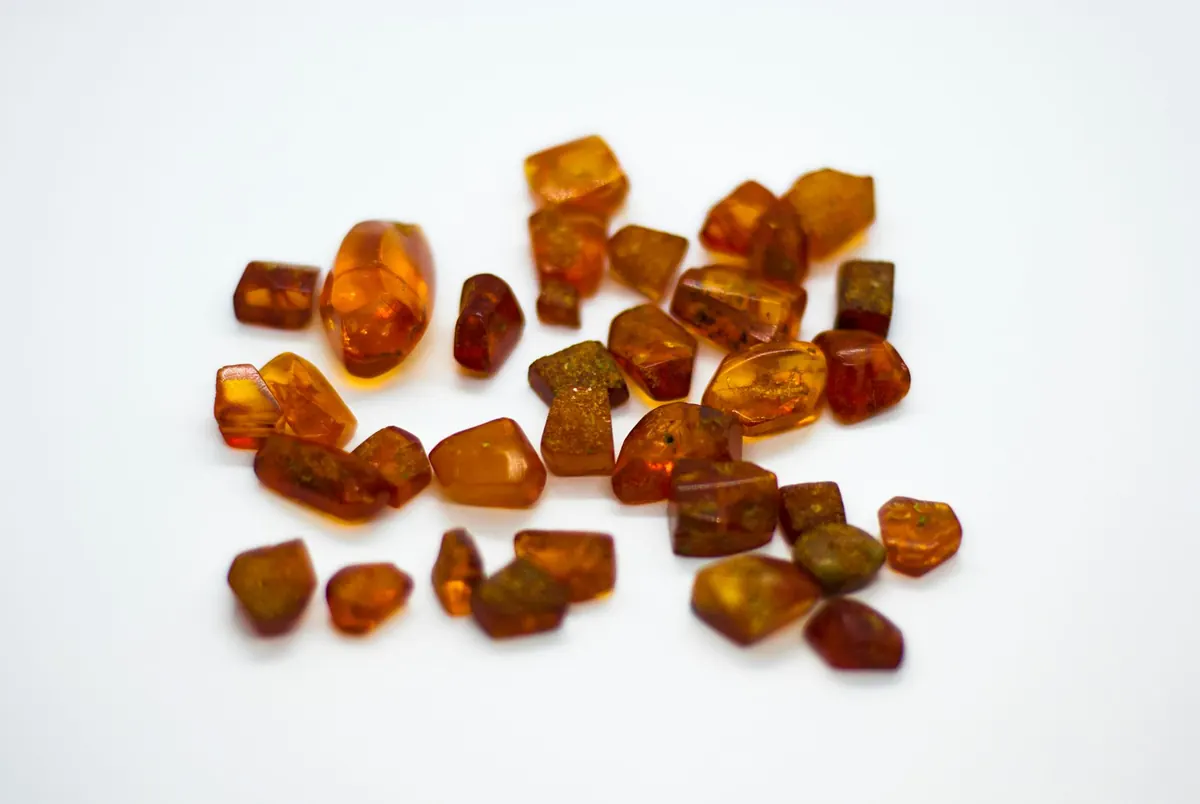
Two pieces of amethyst can sit on the same shelf and feel as though they came from different planets. One is a dusty chunk of geode, iron staining in the crevices, a point leaning left. The other is a polished tower with a mirror shine and colour that seems lit from inside. Both are amethyst. The difference is finish — and choosing between raw and polished is less about quality than about what you want the stone to do for you.
"Raw" only means the stone has not been shaped or polished. It says nothing about how it left the ground, how intact it is, or how good it looks. A Moroccan amethyst cluster still sitting on its white quartz base is raw. So is a pair of book-matched geode halves, an Arkansas point with two clean terminations, a floater with no attachment scar at all, and a lump broken off a larger specimen during extraction. Some of those are superb. Some are scrap.
That is why condition matters more than the label. When you look at a raw piece, check whether the crystal terminations are natural and intact, whether there are fresh white breaks (damage, not character), whether the matrix adds context or just bulk, and whether the colour holds up in ordinary daylight rather than a phone flash. A raw point with a chipped tip is not "rustic". It is a damaged point, and it should be priced like one.
Polishing is abrasive work, done in stages with progressively finer grit until the surface reflects light instead of scattering it. The method changes the result enormously.
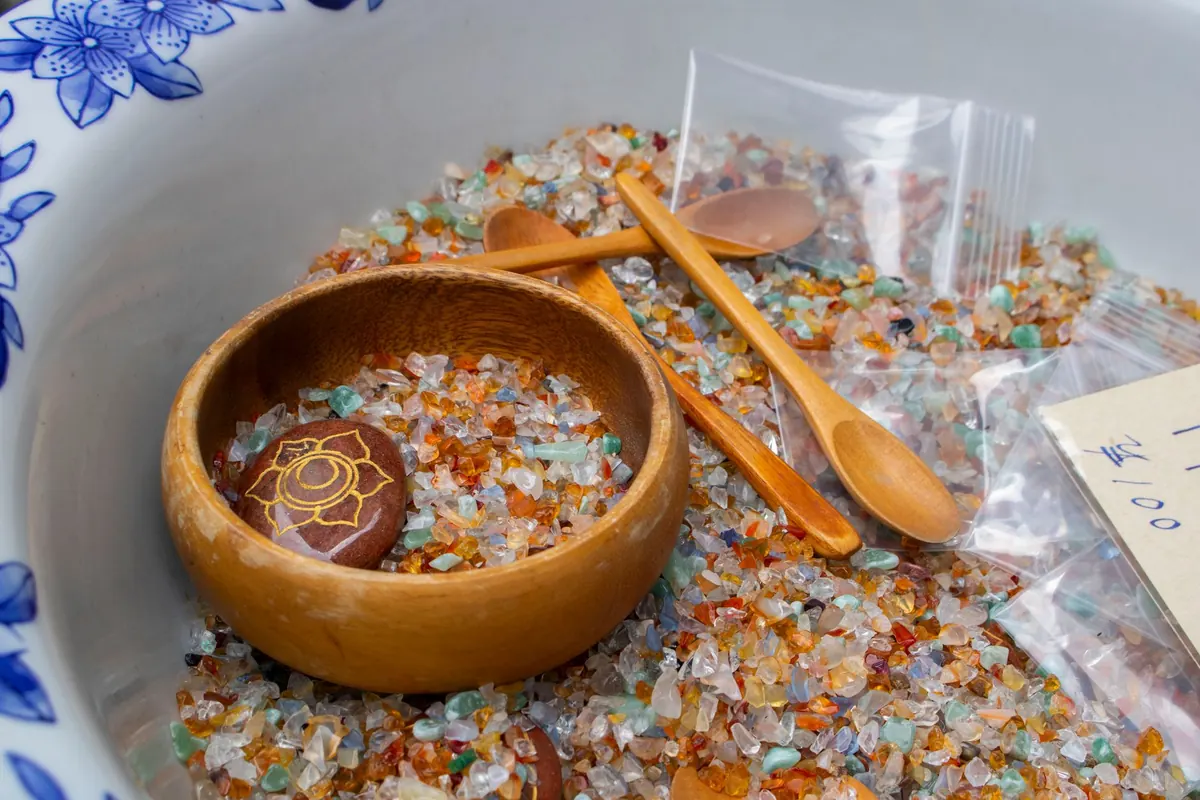
Tumbled stones go into a rotating or vibrating barrel with coarse grit, then finer grit, then a polish, often over several weeks. The process rounds every edge, so it suits chips, small pieces and softer stones that would crumble on a wheel. It also removes weight across the whole batch, which is one reason tumbled stones are usually made from inexpensive material: you would not tumble a specimen worth keeping whole.
Hand work on a lapidary wheel preserves more of the original shape. A cutter can polish the faces of a point, round a slab into a cabochon, carve a freeform, or facet a clear piece for light return. This is slower and more skilled, and it shows: a well-polished point keeps its silhouette while gaining a glassy surface. Faceting, though, means grinding away the natural crystal shape entirely.
Not every stone tolerates a wheel. Halite and selenite are water-soluble and can be damaged by standard wet polishing. Malachite and other copper-bearing minerals produce dust you do not want to breathe. Delicate zeolites, thin terminations and brittle acicular crystals tend to snap. And a fine specimen with perfect natural faces is usually worth more left exactly as it is.
A rough surface scatters light in every direction. That is why raw crystals often look paler and flatter than you expect from photographs, particularly pale amethyst, rose quartz and fluorite. Polishing lets light enter the stone, so colour deepens and internal features come forward: phantoms, veils, growth zoning, the odd bubble or inclusion.
The trade works both ways. Polishing also makes fractures and cloudy patches easier to see, and it erases surface detail — the fine striations on a quartz face, the growth patterns that tell you how the crystal formed. Some stones only show their character after cutting: rough labradorite can look like grey concrete until it is polished and the flash appears, and banded malachite is far more legible with a smooth surface.
Three things drive the gap between a raw piece and a polished one: weight loss, labour, and what the rough was worth before anyone touched it.
Weight loss is real but modest in tumbling and more dramatic in faceting, where a clear crystal can lose a large share of its volume to produce a cut stone. Labour matters too, especially for hand-polished spheres and carvings. But the biggest factor is usually the starting material. A large, undamaged quartz point or a well-formed cluster is scarce, and scarcity pushes prices higher than shine does. Meanwhile, plenty of cheap polished pieces are cheap because they were cut from low-grade rough — a modest tumbled stone may cost far less than a good raw specimen of the same species.
There is also a size premium. Spheres, towers and slabs need clean blocks of material, and cutting a sphere out of a displayable specimen destroys the specimen. That is why a polished piece can be both expensive and, in collector terms, less interesting than the rough it came from.
Lean raw. Collectors care about locality, matrix, intact terminations and provenance, and they usually prefer a piece that has not been repaired, glued or coated. A polished specimen can still be legitimate — many species, agate and jasper among them, only present well when cut — but if a classic crystal specimen has been polished, ask why. Often it was damaged and the cutter tidied it up.
Lean polished, or mix both. Polished pieces read clearly from across a room, are easy to dust, have no sharp edges, and sit happily next to books, lamps and ceramics. Raw clusters work beautifully as a single focal point, but crevices collect dust and iron staining can mark a pale shelf.
If you are tempted to polish your own finds, treat the dust as the hazard it is — copper-bearing minerals such as malachite deserve particular respect — and use proper ventilation, respiratory protection and the safety guidance supplied with the equipment. Otherwise, buy the finish that matches how you live with stones: raw for the story and the structure, polished for the colour and the light.
Photo: Olga Kovalski / Pexels
Learn to spot dye pooling, unnatural saturation, and coated surfaces with simple at-home checks, and read...
A practical guide to Italian mineral fairs: how the shows are organised, how pricing and etiquette work,...
A simple spring equinox routine for sorting, sunning, airing and recharging your crystal collection, with...