Genuine vs. Dyed or Heat-Treated Crystals: A Spotter's Guide
Learn to spot dye pooling, unnatural saturation, and coated surfaces with simple at-home checks, and read...


A single piece of amethyst on a windowsill can look like a small event. Twenty pieces crammed onto the same sill look like a storage problem. The difference is rarely the crystals themselves — it is the decisions made around them: what sits next to what, where the light falls, how much empty space is left alone. Display is an editing job, not a shopping job.
What follows are six approaches that work on real shelves, real desks and real bedside tables, including the narrow ones. None of them require special furniture. All of them assume you already own more stones than you can comfortably show at once, which is true for most people who collect.
Before arranging anything, empty the shelf completely. Lay the pieces on a table or the floor and look at the collection as a whole. You are looking for the anchor: the largest, darkest or most structurally interesting piece, the one your eye lands on first. That piece goes roughly one third of the way in from one end of the shelf, not dead centre.
Everything else on that surface becomes a supporting player. A tall cluster of clear quartz behind a low piece of rose quartz, a small pyrite cube off to the side — they read as a composition because they are clearly answering to something. When every piece is the same size and weight, the eye has nowhere to rest and the shelf reads as inventory.
If you are working with a wide shelf, two anchors are fine, as long as there is a genuine gap of empty shelf between them. Two anchors sitting close together simply look like a pile with ambitions.
Odd numbers look intentional. Even numbers, especially pairs, tend to look like matching sets and invite comparison — which is the opposite of what you want. A trio of stones with one tall piece, one round and one flat will photograph well and, more importantly, look settled from across the room.
Height variation matters more than most people expect. A row of six similar tumbles lined up along a shelf edge — what collectors sometimes call the soldier treatment — flattens everything into a stripe. Instead, lift one piece on a small riser: a stack of two art books, an inverted ceramic bowl, an acrylic stand from a picture frame. The eye reads the change in level as a deliberate gesture.
Leave a gap roughly the width of your palm between groups. This single habit does more to prevent visual clutter than any other adjustment you can make.
Clutter happens at the edges, where objects start to bleed into each other. A tray stops that. A shallow wooden board, a stoneware plate, a lacquered box lid, a length of slate — anything with a defined rim tells the eye that these items belong together and that the group is finished.
Trays also solve maintenance problems. Dusting a shelf full of loose stones means picking up every one of them. Dusting a tray means lifting one object and wiping underneath it, then moving the whole arrangement six inches to the left when you want a change of scene.
Match shapes rather than colours. A round tray on a rectangular shelf softens the geometry. A rectangular board on a narrow floating shelf keeps the line clean. Nest a small dish on the large tray for the smallest pieces — tiny stones scattered loose are the fastest route back to looking messy.
Overhead lighting flattens stones and casts shadows straight down, which hides exactly the internal structure you bought them for. A small dedicated light source — a slim LED picture light above the shelf, a puck light tucked behind a cluster, a low-wattage table lamp beside the display — changes a shelf completely for very little money.
Backlighting is especially effective with thin slices and translucent pieces: agate slices, thin fluorite, satin spar. Even a plain white LED behind the piece will bring out banding that is invisible in daylight.
A few practical cautions worth keeping in mind:
Good crystal display is mostly about the space you decline to fill.
It feels wasteful at first. Try it anyway. On a shelf of average depth, aim for roughly one third occupied and two thirds clear, and see how much better a favourite piece looks when it has room around it. Depth behaves the same way: place the biggest piece towards the back, but not pressed against the wall, so its shadow falls inside the shelf rather than out of sight.
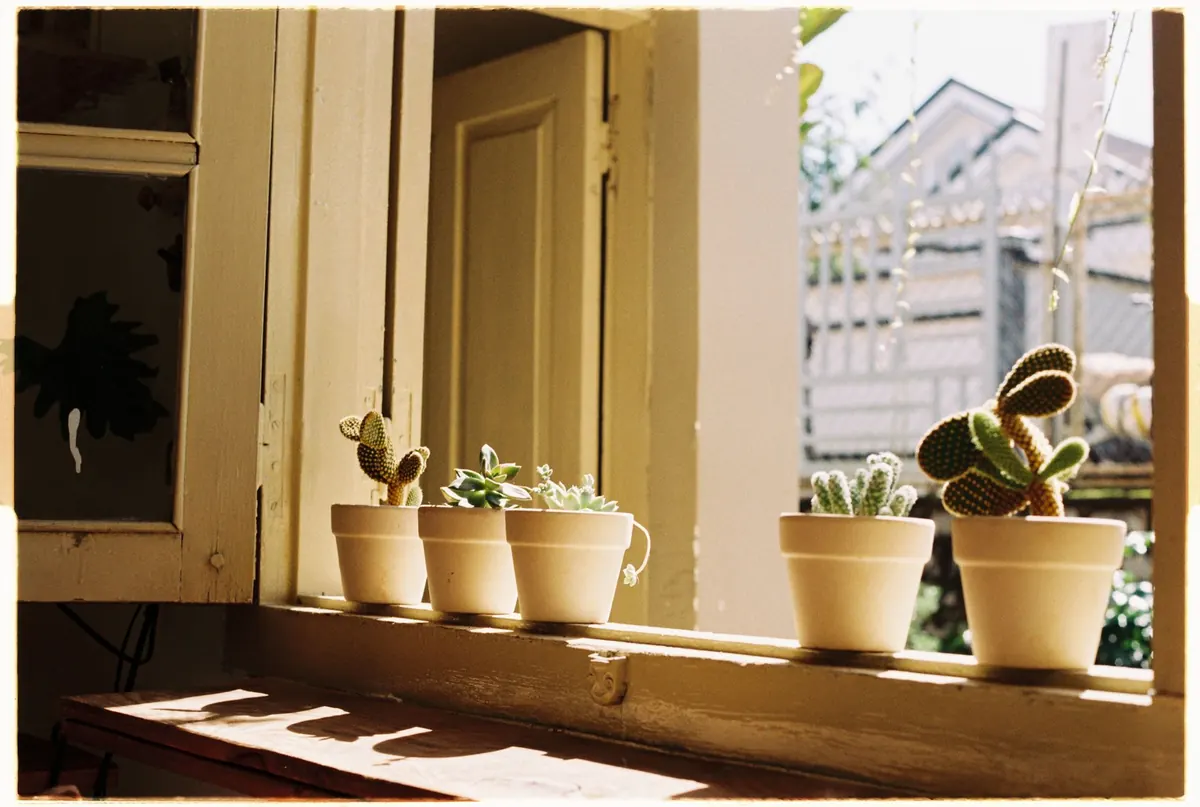
This applies to horizontal surfaces too. A console table holds one tray and one large piece comfortably. A windowsill holds one specimen and a plant. The moment you add a third unrelated object, the arrangement starts to read as a queue rather than a display.
Working surfaces are not display space, so treat them as spot-lit moments rather than collections. Three objects maximum on a desk, and one of them should be functional — a stone paperweight, a palm stone you actually pick up, a small cluster holding down a stack of notebooks. On a bedside table, one piece is usually right: something smooth, cool and pleasant to touch in the dark.
The collection will grow. The surface will not. Keep a shallow box in a cupboard and treat it as a rotation library: pieces come out for a season, then go back in. Changing four or five objects at the start of each season keeps the display feeling current without buying anything new, and it gives pieces you had stopped noticing a second life.
A quick edit routine that takes about ten minutes:
If a shelf has started to feel busy, do not reorganise the whole room. Take everything off one surface, dust the tray, choose three pieces, and put the rest away for a while. That is the entire method: fewer pieces, one clear anchor, a boundary around the group, and a light source that hits the stone rather than the wall behind it. Do this once on a Sunday morning, then leave it alone. The crystals will look arranged because they are — and the empty space around them will do half the work.
Photo: Pexels / Pixabay
Learn to spot dye pooling, unnatural saturation, and coated surfaces with simple at-home checks, and read...
A practical guide to Italian mineral fairs: how the shows are organised, how pricing and etiquette work,...
A simple spring equinox routine for sorting, sunning, airing and recharging your crystal collection, with...