Genuine vs. Dyed or Heat-Treated Crystals: A Spotter's Guide
Learn to spot dye pooling, unnatural saturation, and coated surfaces with simple at-home checks, and read...

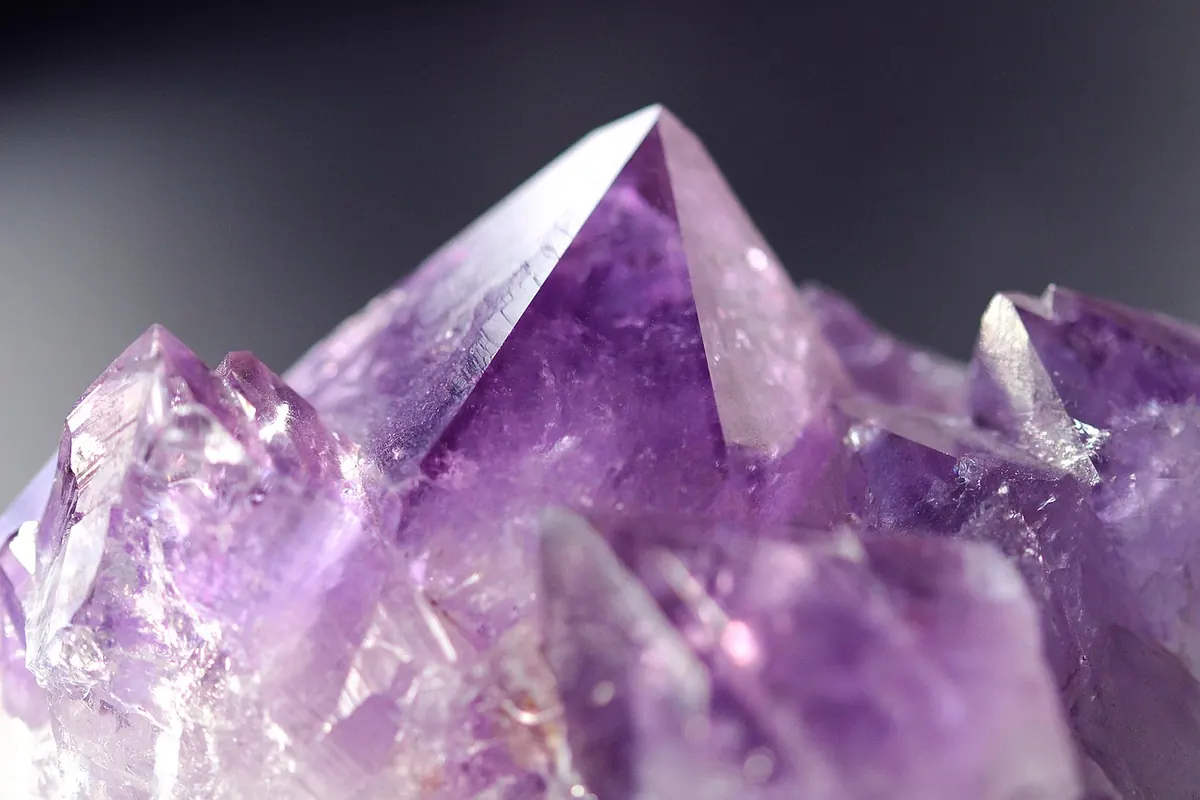
Put a violet amethyst point next to a purple fluorite point, and at first glance they can look like cousins from the same crystal family. Both can be transparent, both can be gently to deeply purple, and both are popular in jewelry, mineral displays, and crystal shops. But amethyst and fluorite are not the same material, and the differences matter if you are buying a specimen, cleaning a collection, or trying to identify a mystery stone. Amethyst is a variety of quartz, while fluorite is calcium fluoride. That single fact explains most of the practical differences: amethyst is harder, tougher in everyday handling, and usually formed in six-sided points, while fluorite is softer, cleaves more easily, and often appears in cubes, octahedra, or banded masses.
The good news is that you rarely need a laboratory to tell them apart. A careful glance at crystal shape, color zoning, surface wear, and the way light moves through the stone will usually get you close. A few simple checks, done gently, can confirm the identification. The key is to know what to look for before you start scratching, tapping, or shining lights around.
At a glance, the most useful clues are hardness, crystal habit, and the pattern of color inside the stone. Amethyst is quartz, with a Mohs hardness of about 7. Fluorite sits much lower, around 4. That means amethyst can scratch glass, while fluorite generally cannot. Amethyst usually grows as hexagonal prisms with pointed pyramidal ends, though it can also be massive, tumbled, or cut into faceted gems. Fluorite commonly forms cubes and octahedra, and it has perfect cleavage in four directions, so broken pieces often look like stepped or angular chunks rather than glassy shards.
If a purple crystal can scratch ordinary glass, think amethyst. If glass or a steel tool can scratch it, and the broken edge looks stepped or flat, think fluorite.
Crystal shape is often the fastest clue, especially with raw specimens. Amethyst is quartz, and quartz has a familiar habit: a six-sided column that ends in a point. The sides are usually straight and glassy, and the termination may show smaller pyramid faces. A cluster of amethyst points will often have several prisms rising from a common base, with varying heights and slightly different purple tones.
Amethyst points tend to look like elongated hexagonal columns. The surfaces are usually smooth and vitreous, and the tip is pointed rather than flat. Some amethyst is massive, forming grapelike or granular crusts, and tumbled amethyst loses the prism shape entirely. In faceted jewelry, amethyst can be cut into almost any shape, so shape alone is not enough. Still, a raw amethyst point is usually easy to recognize once you have seen a few.
Fluorite is famous for cubic crystals. A raw fluorite cube may look like a small glassy box, sometimes with stepped edges or a slightly frosted surface. Fluorite also forms octahedra, which look like two pyramids joined at their bases, and it can form interpenetrating twins that look like two cubes growing through each other. Many fluorite specimens are massive rather than clearly crystallized, and those pieces can be banded in purple, green, blue, yellow, or clear layers. Because fluorite has perfect cleavage, broken pieces often show flat, shiny planes that catch the light like little windows.
Both stones can be purple, but they rarely wear their purple in the same way. Amethyst gets its color from trace iron and natural radiation within quartz. The color may be uneven, with darker tips, smoky patches, or phantom zones that follow the crystal’s growth. High-quality amethyst can be evenly saturated, but even then it tends to have a clear, glassy look rather than a layered one.
Fluorite is often strongly zoned. A single fluorite cube might have a purple core, a green outer layer, and a clear rim, or it might show sharp bands of color running parallel to crystal faces. Fluorite can also be purple, blue, green, yellow, pink, or colorless, sometimes all in one specimen. That banding and color variety are useful clues. If the purple seems painted on in geometric stripes, or if green and purple meet in sharp bands, fluorite becomes much more likely.
Do not rely on color alone. Both minerals can be pale lilac, deep violet, or nearly clear. Some amethyst is heat-treated or dyed, and some fluorite is polished into beads or spheres that hide its crystal structure. Use color as a supporting clue, not a final verdict.
Hold the stone in good light and look at how the surface reflects. Amethyst typically has a vitreous, glassy luster. Fluorite also looks glassy, but it can appear slightly softer or more “oily” on some surfaces, especially when polished. Neither stone is metallic, so a bright metallic shine is a sign that you are looking at something else entirely.
Many fluorite specimens fluoresce under ultraviolet light. The glow is often blue or violet, though green, yellow, and white are possible. The effect is not universal, so a fluorite that does not glow is still fluorite. But if a purple stone lights up under a UV lamp, fluorite is a strong candidate. This is one of the most satisfying checks because it is non-destructive and easy to do with a small UV flashlight.
Amethyst generally does not fluoresce in the same dramatic way. It may show internal reflections, veils, or color phantoms, but it usually stays dark under UV. Amethyst can contain inclusions such as rutile needles, hematite flakes, or tiny bubbles, and those inclusions can create interesting sparkle or phantom shapes. Fluorite often contains fluid inclusions, growth zones, or tiny bubbles that look like internal clouds. Under magnification, the internal worlds of the two stones can look quite different.
Fluorite is denser than amethyst, with a specific gravity around 3.18 compared with about 2.65 for quartz. In hand, a fluorite piece of the same size may feel noticeably heavier. That difference is subtle unless you compare two similar pieces side by side, but it can help when a stone is polished and lacks crystal shape.
Both stones feel cool when you first pick them up, so temperature is not a reliable test by itself. Fluorite may feel a little softer or more slippery on polished surfaces, while amethyst feels harder and more glassy. Again, these are impressions, not proof. The most reliable simple test remains hardness combined with crystal shape and cleavage.
For a gentle hardness check, try scratching a piece of ordinary glass with an inconspicuous edge of the stone. Amethyst, at hardness 7, should leave a scratch in glass, which is about 5.5. Fluorite, at hardness 4, should not. Do this carefully, and never scratch a finished gem or a specimen you care about. If the stone is jewelry or a collector’s piece, skip the scratch test and rely on shape, cleavage, and fluorescence.
Purple fluorite is not the only stone mistaken for amethyst. Purple glass, synthetic amethyst, dyed quartz, and lavender-colored spinel or sapphire can all enter the conversation. Glass often has tiny round bubbles and swirl marks, and it feels softer and warmer than either mineral. Synthetic amethyst can be chemically identical to natural amethyst, so it may pass every simple test; that is a case for buying from a reputable seller with clear disclosure. Purple sapphire is much harder and denser than amethyst, while spinel has a different crystal structure and often a different luster.
Knowing whether you have amethyst or fluorite changes how you store and clean it. Amethyst is a durable quartz and can handle ordinary dusting, mild soapy water, and careful handling. It can still be scratched by diamond, corundum, and other hard materials, and prolonged sunlight may fade some amethyst over time. Fluorite is much more fragile. It scratches easily, chips along cleavage planes, and can be damaged by hot water, sudden temperature changes, or harsh chemicals. A fluorite sphere or carving should be kept away from harder stones in a display case, and it should never be cleaned with abrasive pads or strong cleaners.
Amethyst jewelry can be worn regularly with reasonable care. Clean it with lukewarm water, mild soap, and a soft cloth. Store it separately from softer stones so it does not scratch them. For display, keep amethyst away from prolonged direct sun if you want to preserve saturated color. Raw amethyst points can be dusted with a soft brush, and clusters can be rinsed briefly if they are not attached to delicate metal.
Treat fluorite as a delicate mineral. Dust it with a soft brush or use a dry microfiber cloth. If washing is necessary, use only cool water and mild soap, dry immediately, and avoid soaking. Do not use ultrasonic cleaners, steam cleaners, or acidic cleaners. Store fluorite in a padded box or on a stable shelf where it will not bump into harder specimens. Because fluorite cleaves, a small knock can produce a flat break that changes the appearance of the piece.
The excitement of identification can lead to rough tests that damage a specimen. Avoid scratching a polished surface, striking the stone, or using household acids. Do not assume that a purple color proves amethyst, and do not assume that fluorescence proves fluorite. Many fluorite pieces do not glow, and some amethyst can show weak or unusual reactions. Also, be careful with UV lights: some stones and dyes can fluoresce for reasons unrelated to species, so use fluorescence as one clue among several.
Amethyst and fluorite can both be beautiful purple stones, but they are easy to separate once you know the signs. Amethyst is harder, usually forms six-sided points, breaks with a glassy fracture, and generally does not fluoresce. Fluorite is softer, often forms cubes or octahedra, splits along flat cleavage planes, frequently shows banded color, and often glows under UV light. If you remember nothing else, remember this: hardness and shape first, color second. That simple order will help you tell amethyst from fluorite at a glance, and it will also help you care for each stone in the way it deserves.
Photo: Dieter444 / Pixabay
Learn to spot dye pooling, unnatural saturation, and coated surfaces with simple at-home checks, and read...
A practical guide to Italian mineral fairs: how the shows are organised, how pricing and etiquette work,...
A simple spring equinox routine for sorting, sunning, airing and recharging your crystal collection, with...