Genuine vs. Dyed or Heat-Treated Crystals: A Spotter's Guide
Learn to spot dye pooling, unnatural saturation, and coated surfaces with simple at-home checks, and read...

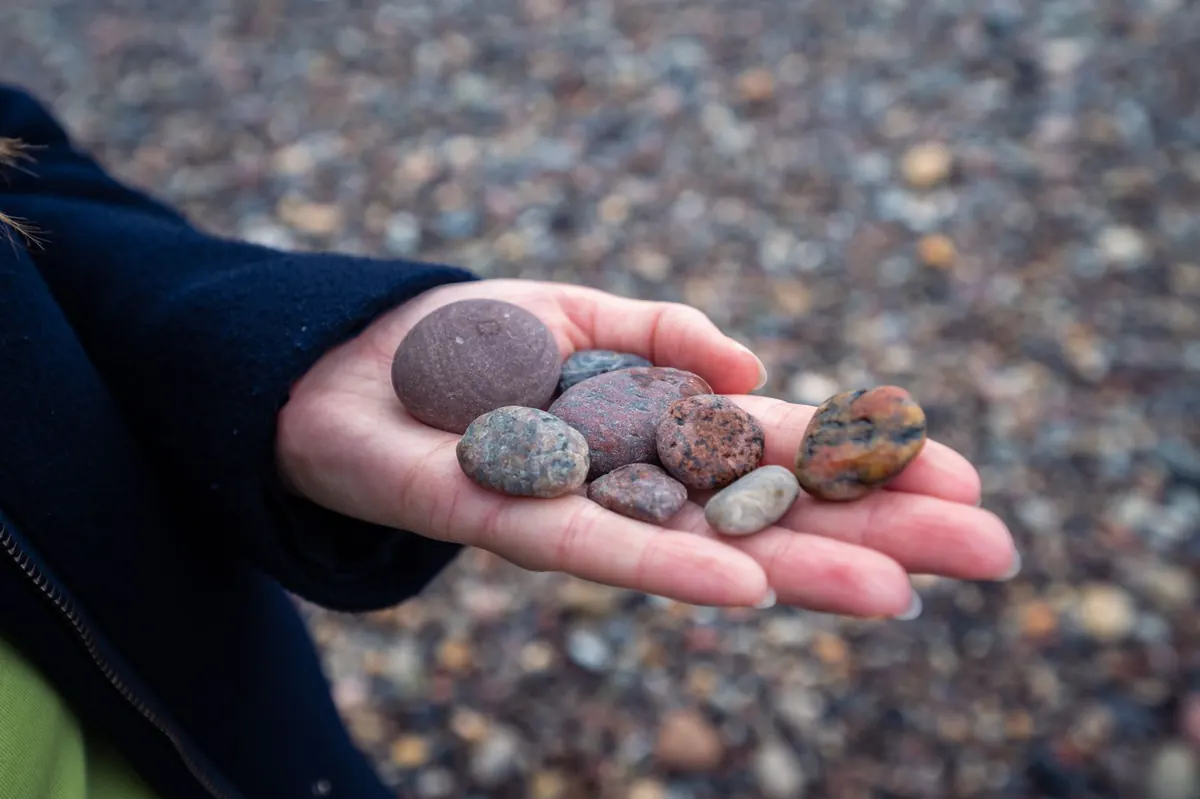
The first healing stones usually arrive with more hope than information. Someone gives you a piece of rose quartz, or you buy an amethyst point at a market because it caught the light, and suddenly there is a small bowl on your dresser and a vague sense that you should be doing something with it. That is how most collections start, and it is also where most of the small, avoidable damage happens. None of the mistakes below are dramatic. They are the quiet ones: a stone that fades on a windowsill over a summer, a polished piece dulled by salt, a drawer of purchases you never got to know. Each one has a simple fix, and most take less than five minutes to put right.
Sunlight is the most popular way to charge a stone, and for some it is perfect. For others it is the slowest way to lose the colour you paid for. Amethyst, rose quartz, fluorite and kunzite are all known to fade in direct sun over long stretches, and some calcites and dyed stones change too. The damage is not instant — an afternoon on the sill will not undo anything — but months of strong light will quietly bleach a deep amethyst to pale lilac.
The fix is a matter of metres. Move sun-sensitive pieces back from the glass, or give them bright indirect light instead. Moonlight, sound, smoke, or a few hours in a shaded spot will do the same job. Save the sunny windowsill for clear quartz, citrine, smoky quartz and black tourmaline, which take it well.
Salt water is the default cleansing method online, and it is genuinely hard on a lot of material. Halite and selenite dissolve or soften. Pyrite rusts. Malachite and many copper-based stones are damaged by water, and soft stones like fluorite and calcite dull easily. Add salt and you are also grinding fine crystals against a polished surface every time you stir the bowl.
Then there is the mixing problem. Salt water, then boiling water, then a night in the sun is not thorough — it is just harsh, and sudden temperature change can crack a stone that was fine on its own.
Match the method to the mineral instead:
Pick one method per cleansing and let it be enough.
Almost everyone overbuys at the start, and nobody regrets it until they are staring at forty tumbled stones with no idea which is which. A bargain assortment feels like a shortcut into the subject, but stones teach you nothing while they sit in a bag. You learn by carrying one piece for a week, noticing when you reach for it, and finding out whether you actually like the weight of it in your pocket.
Before the next purchase:
A small collection you know well is worth more than a large anonymous one, and it costs less.
Two facts solve most confusion: the mineral name and the hardness. Trade names are marketing, not mineralogy. "Aura quartz" is quartz coated with metal vapour. Much of what is sold as citrine is heat-treated amethyst. "Jade" can mean jadeite, nephrite, or something else entirely. None of that makes a stone bad — treated material is everywhere and often lovely — but you should know what you are holding.
Hardness matters day to day. On the Mohs scale, talc sits at 1 and diamond at 10; quartz is 7, fluorite is 4, calcite is 3. A fingernail scratches around 2.5, a copper coin around 3.5, steel around 5.5. So a quartz point stored against a fluorite cube will scratch it, and a soft stone on a keyring will dull within a month. Ask the seller for the mineral name, the treatment and the hardness. If they cannot tell you, that is your answer.
Most damage happens after the purchase. A bowl of tumbled stones looks beautiful and slowly chips itself, because hard pieces roll against soft ones every time the bowl moves. Sunlight fades. Damp air dulls pyrite. Store pieces separately — a cloth pouch, a compartment box, a drawer with dividers — and keep the soft ones away from quartz and anything harder. Label what you can, especially if you own both rough and tumbled versions of the same mineral.
If two stones would scratch each other in a jewellery box, they will do it in your bowl.
A stone is a prompt, not a replacement for action. Carrying one while you avoid sleep, skip appointments or ignore a bill will not change the outcome; pairing it with a small, real step might. That is not a mystical claim — it is how reminders work, and a stone in your pocket is a reminder you can hold and touch.
Give each stone one job. "Calm at meetings" is workable. "Fix everything" is not. And no stone substitutes for professional care: if you are dealing with a health issue, talk to a doctor, and if it is money or legal trouble, talk to someone qualified. Stones can sit alongside that work, not instead of it.
Photo: Luca Gomm / Pexels
Learn to spot dye pooling, unnatural saturation, and coated surfaces with simple at-home checks, and read...
A practical guide to Italian mineral fairs: how the shows are organised, how pricing and etiquette work,...
A simple spring equinox routine for sorting, sunning, airing and recharging your crystal collection, with...